




A white elephant statue pair for the front of your home
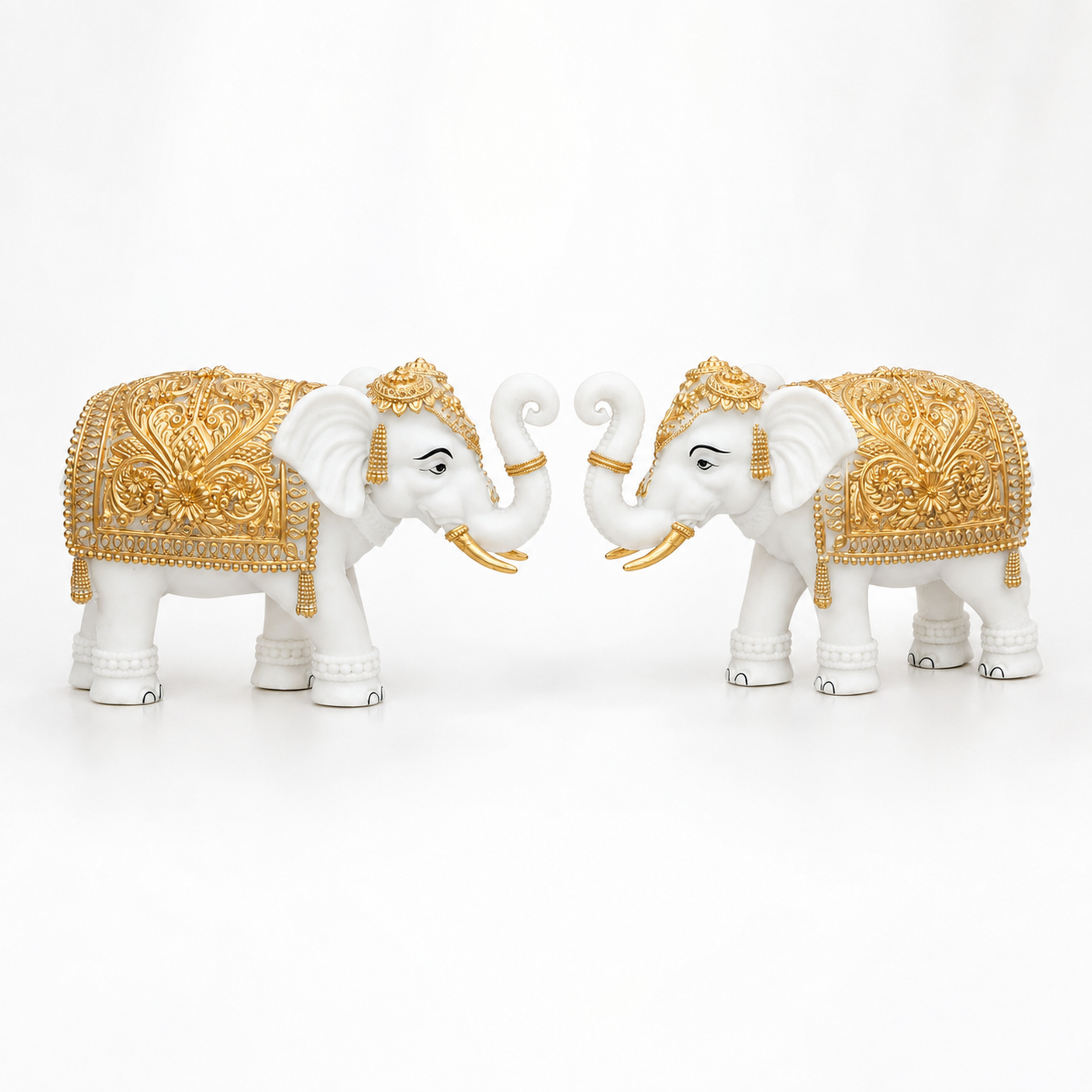
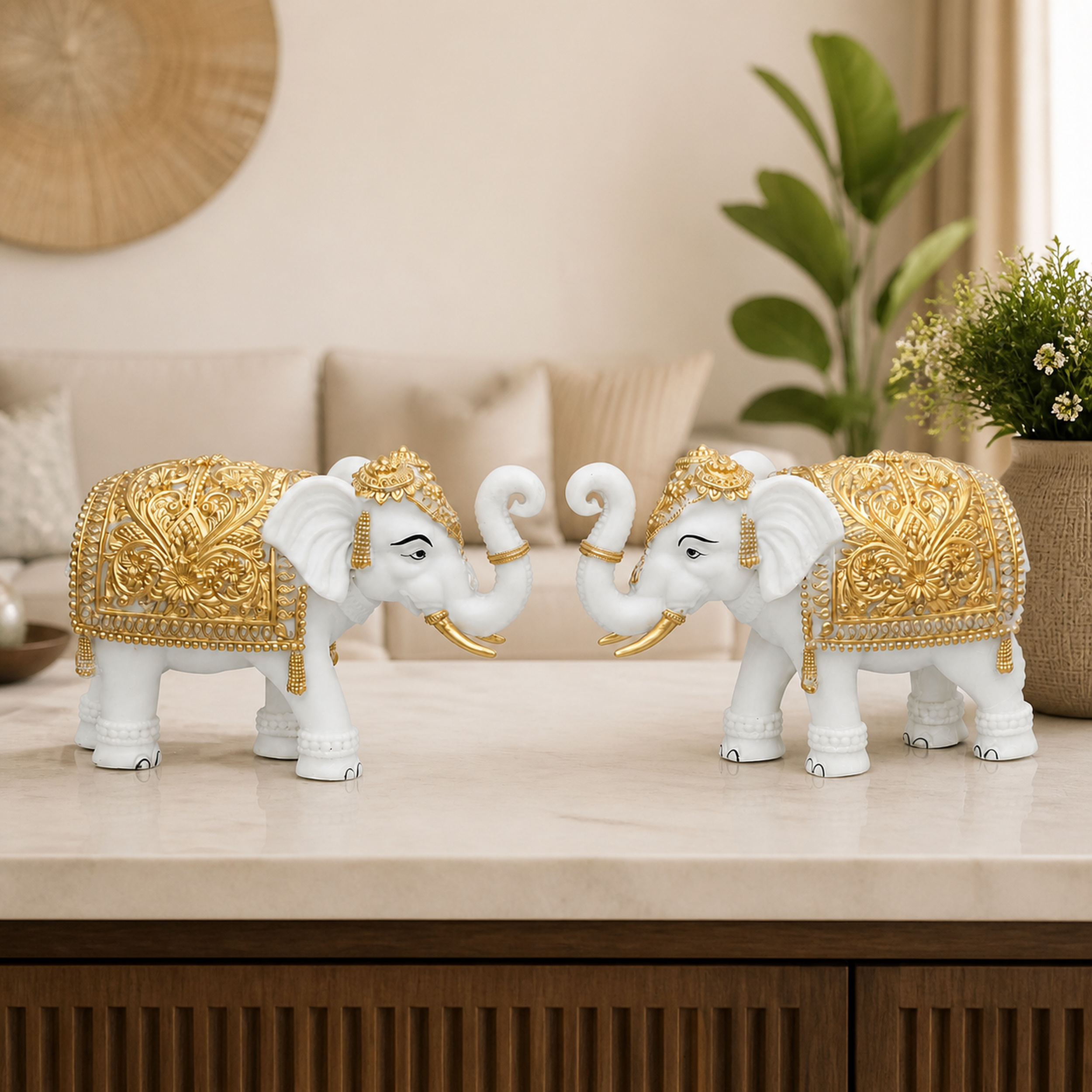
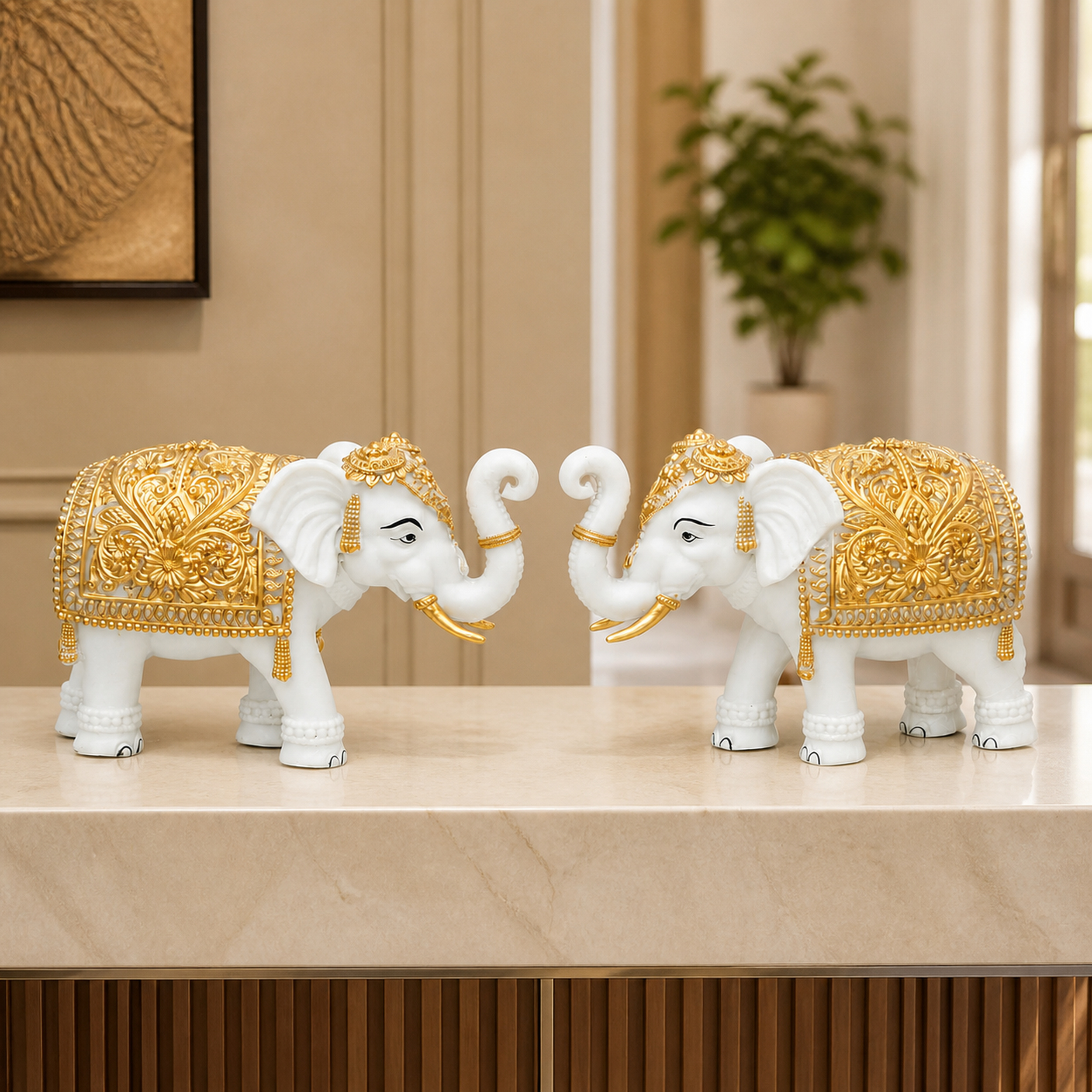
This is a white elephant statue pair with gold work, sold as a set of 2. One faces left and one faces right. They stand as a mirrored pair on either side of a console table, a shelf or a mandir base.
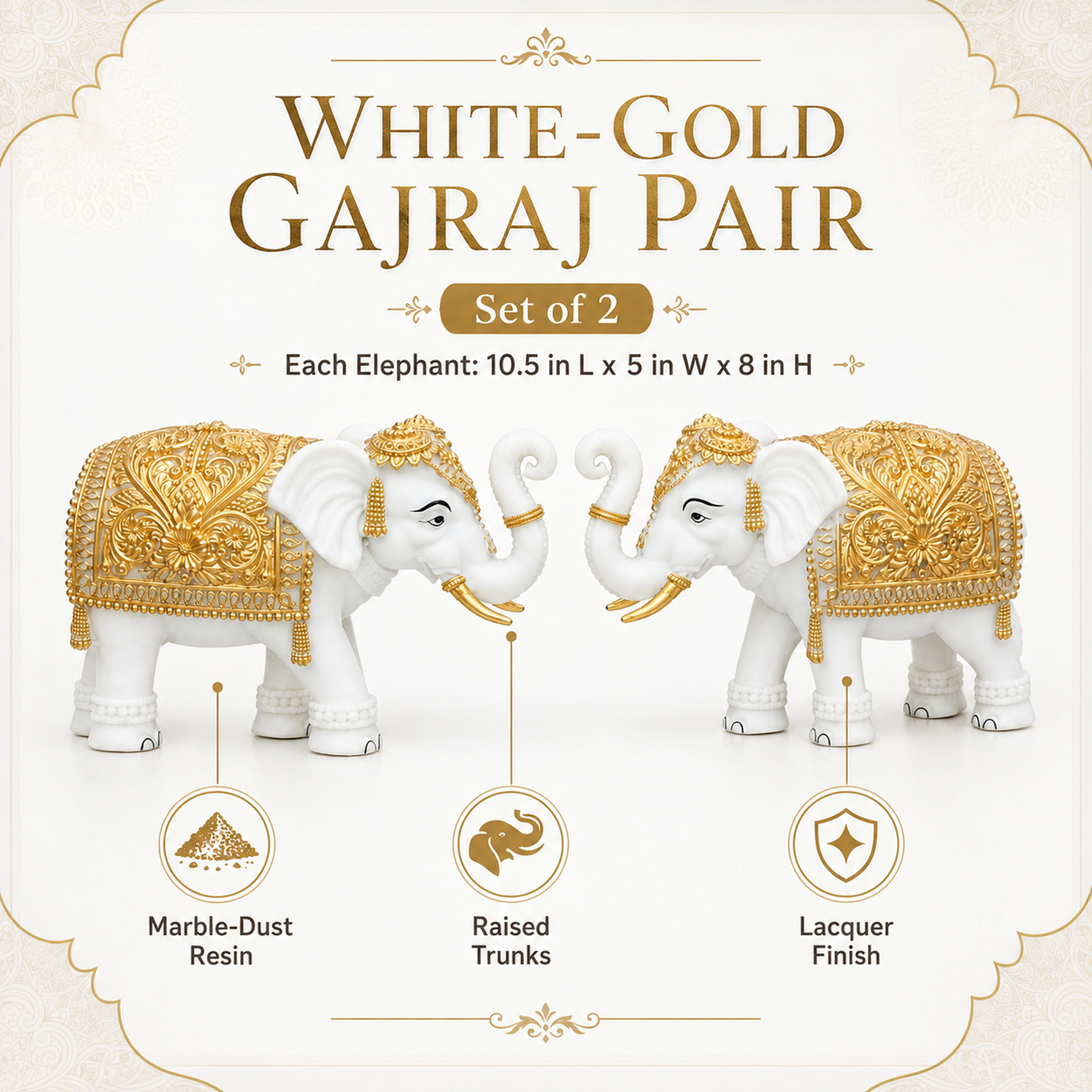
The body is a soft, stone-like white. The saddle, crown, trunk bands and tusks are painted in gold by hand. There is fine black detailing on the eyes and toes, and small white beaded anklets on each foot. Both trunks are raised.
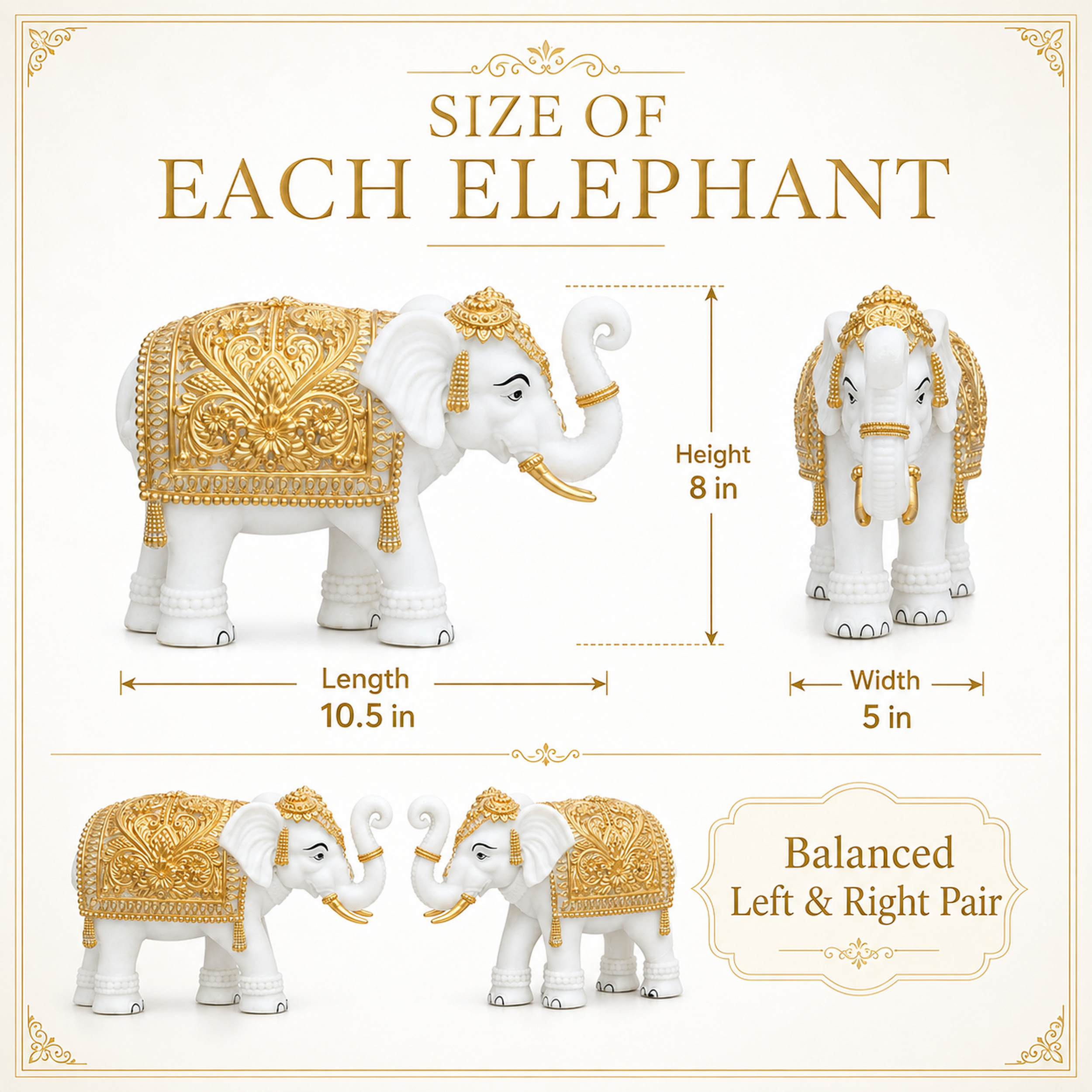
They are large for a tabletop pair. Each elephant is 8 inches high and 10.5 inches long. Put the two of them together on an entrance console and they fill it properly.
The size, in plain numbers
These are the measurements of one elephant, not the pair. You receive two of them.
- Height: 8 in / 20.3 cm
- Length: 10.5 in / 26.7 cm
- Width: 5 in / 12.7 cm
- Weight: 1.5 kg each, so 3 kg for the pair
There is real mass in the hand at 1.5 kg each. That weight is a fair part of what you are paying for.
Why the trunks are raised, and why white and gold
Hathi joda simply means elephant pair. Gajraj means lord of elephants, and it is the word this design is named for.
In Indian tradition an elephant with its trunk lifted is associated with blessings and welcome. A pair with raised trunks is believed to bring that feeling to a doorway. It is the posture most people are looking for when they buy two elephants for a new home.
The colours sit inside the same tradition. Airavata, the elephant of Indra, is described as white. Gajalakshmi, the form of Lakshmi linked with prosperity, is shown flanked by elephants. A white body with gold work belongs in that story rather than beside it. That is why this pair looks at home next to a mandir as well as on a drawing room shelf.
We will not promise you an outcome. It is a belief, warmly held and worth honouring. It is also a lovely reason to place something beautiful at your entrance.
One honest note on colour. The gold is a warm, hand-painted gold, not metal plating. Heavy gold on white always photographs brighter than it reads in a room, and screens differ. Expect something a little softer and warmer than the pictures.
Where an elephant pair is traditionally placed
The advice you will read most often in Indian homes is simple, and it is easy to follow with a pair this size.
- Keep it on a raised, clean surface — a console, a shelf, a chowki or a mandir platform. Traditionally it is not placed directly on the floor.
- The entrance, or the north or the east of a room, are the placements most commonly suggested.
- Facing: a pair is usually turned inwards, into the room, which is believed to welcome good fortune in. Beside a main door or a window, many people turn them outwards instead, as guardians of the doorway. Both are traditional. Pick the one that looks right where you have put them.
- Bedrooms and bathrooms are usually avoided.
All of this is tradition and belief, not a rule and not a guarantee. It is good decorating advice as well. A heavy pair at eye level on a console reads far better than the same pair pushed into a corner.
Decor beside your mandir, not a murti
People ask, so it is worth saying plainly. An elephant pair is decorative. It is not a murti of a deity.
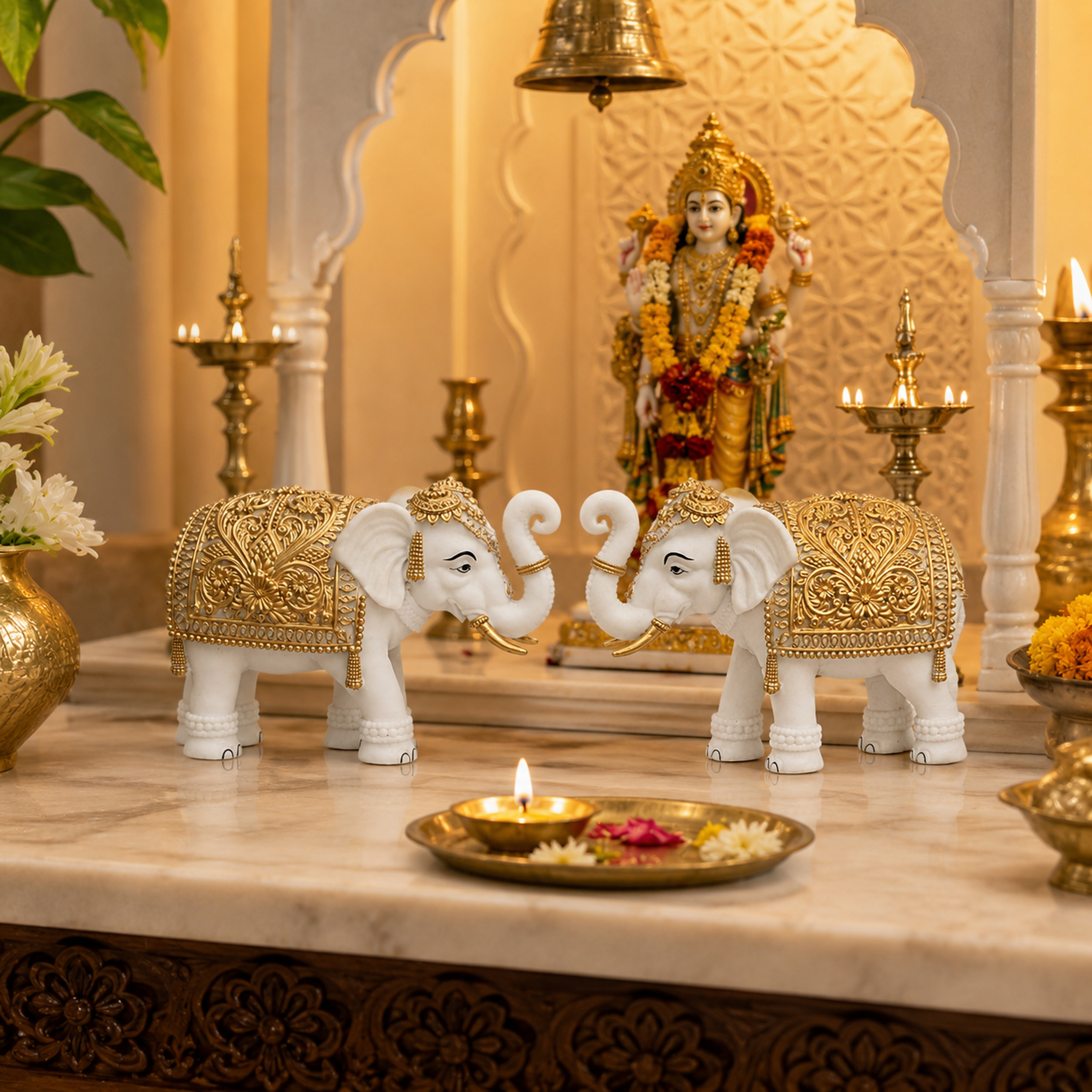
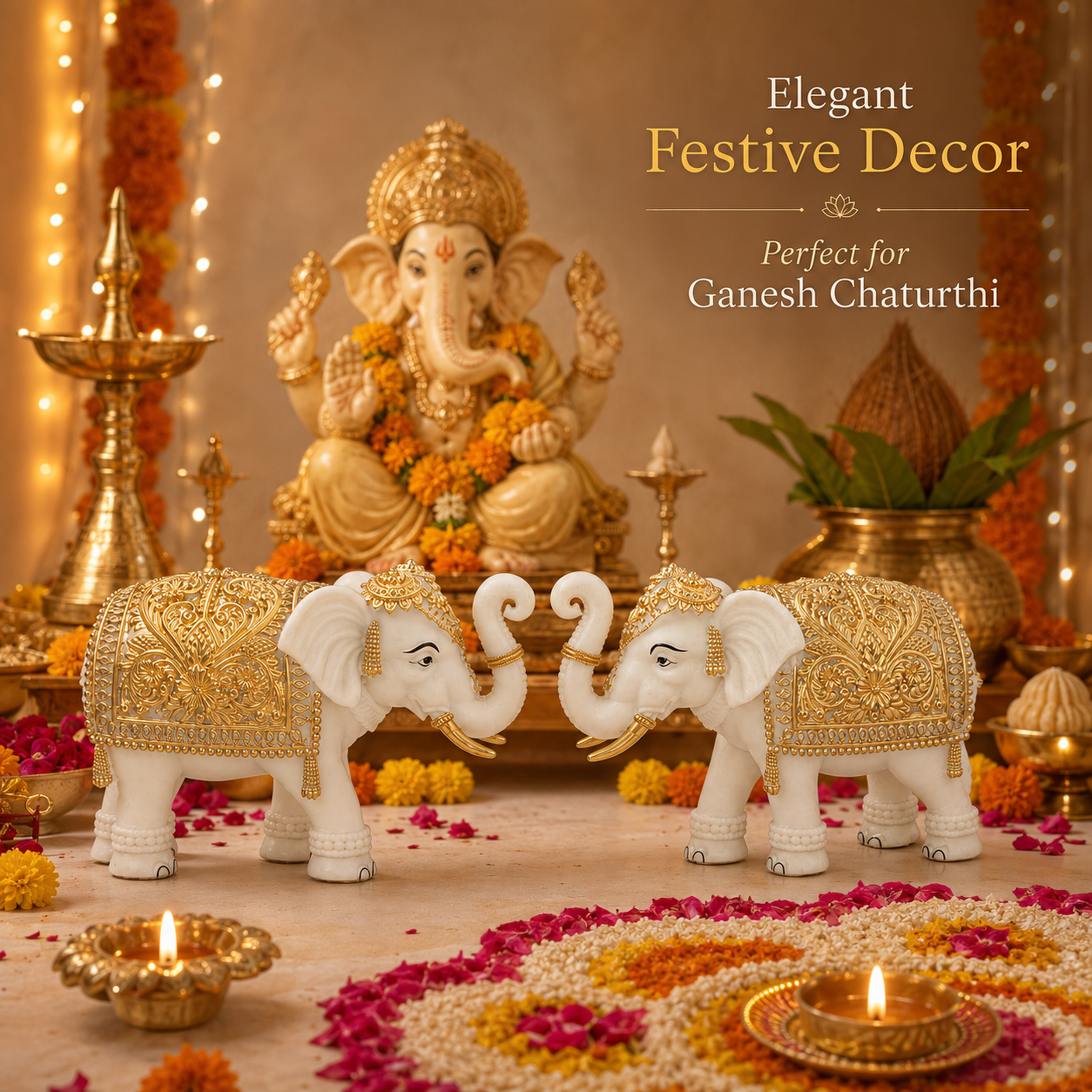
That is exactly why it can stand at the base of a home mandir, on a stone or solid-surface mandir platform, or on either side of a pooja ghar shelf. It flanks the deity. It does not stand in for one. Many customers buy it for that job, and it works just as well on an entrance table if your mandir is already full.
What marble dust and resin actually means
Marble dust is fine stone powder. It is mixed into a resin binder and cast in a mould, then finished and painted by hand. It is not a carved block of marble, and we will never call it one.
The stone powder is what gives the body its cool, matte, stone-like white instead of a shiny plastic sheen. It is also what gives a piece this size its weight in the hand. The two elephants are made and finished as a matched pair, so they sit together as one set rather than two separate buys.
Looking after the gold
The paint is sealed under a lacquer coat, which is what protects the gold from everyday dusting. To keep it looking new:
- Wipe with a soft, dry cloth. For marks, use a barely damp cloth and dry it straight after.
- No abrasive pads, no scouring powder, no chemical or alcohol-based cleaners.
- Do not soak it or hold it under a running tap.
- Keep it out of long, direct sunlight, so the white stays white and the gold stays warm.
- The gold is painted and sealed rather than plated. Treat the raised trunks as the delicate points, and lift each elephant by the body.
Small variations between the two pieces are normal. The floral gold work and the black eye and toe accents on ours are painted by hand, so no two pairs are identical.
A griha pravesh, housewarming or wedding gift
An elephant pair is one of the classic gifts for a new home, and it does not look like a token.
It suits griha pravesh and a housewarming. It suits a wedding or an anniversary for a couple setting up a house. It suits Diwali or Dhanteras for a client or a senior colleague.
It ships in a plain protective carton, not a presentation box. If you are sending it straight to someone, that is worth knowing. Many people have it delivered to themselves first, so they can hand it over in person.
Specifications
- Set: 2 elephants, one left-facing and one right-facing
- Material: marble dust and resin composite, lacquer coated
- Finish: hand-painted white body with gold saddle, crown, trunk bands and tusks; black eye and toe accents; white beaded anklets
- Size, each: 10.5 in L x 5 in W x 8 in H (26.7 x 12.7 x 20.3 cm)
- Weight: 1.5 kg each, 3 kg the pair
- Use: indoor tabletop decor
- Made in India — hand finished in Jodhpur, Rajasthan
- SKU: D3GJ8IN0102
What is in the box
Two elephants, and nothing else. The plants, vases, books, candle holders, gift boxes and marigold flowers shown in the photographs are styling props used to show scale. They are not included.


Reviews
There are no reviews yet.